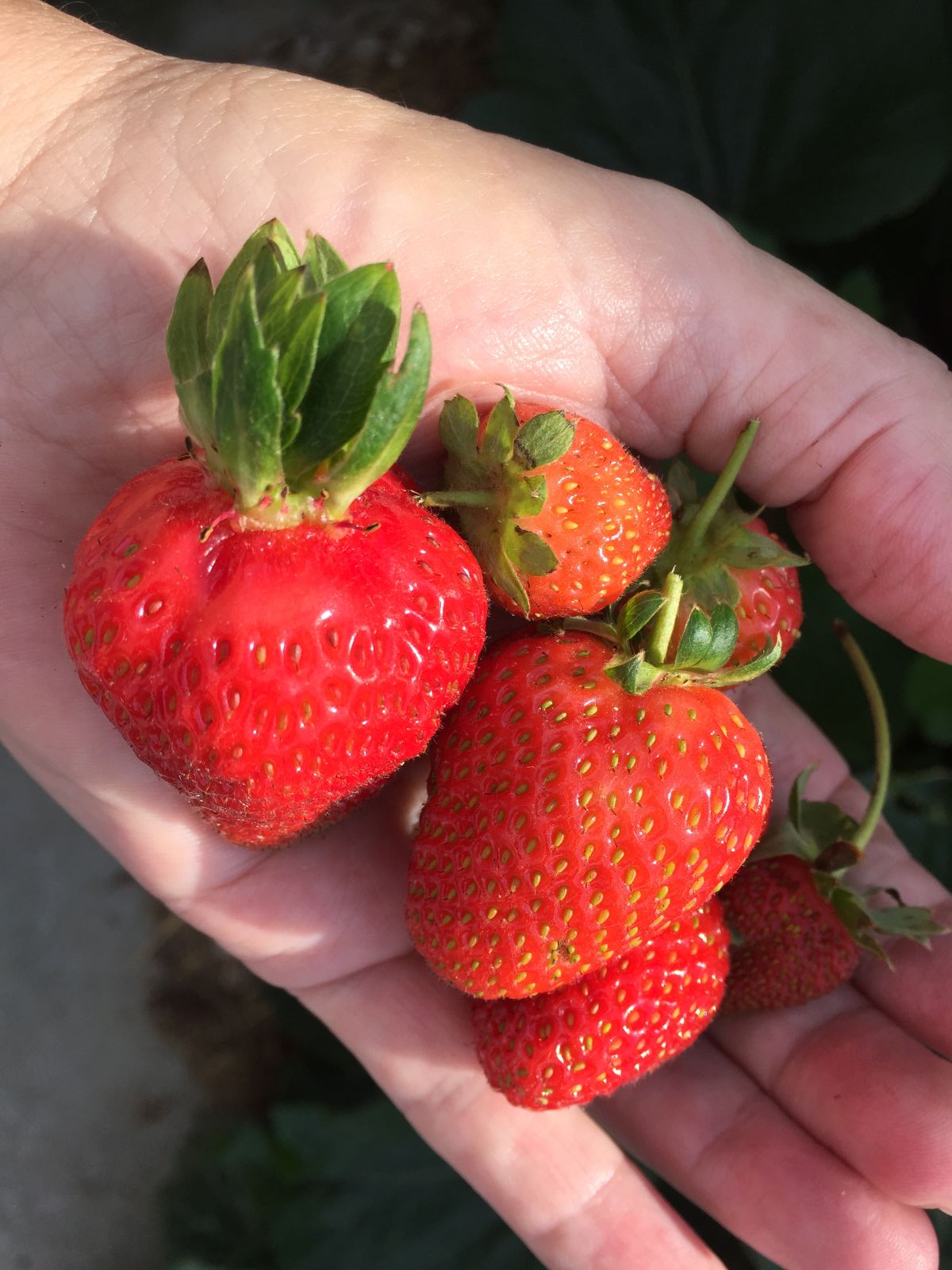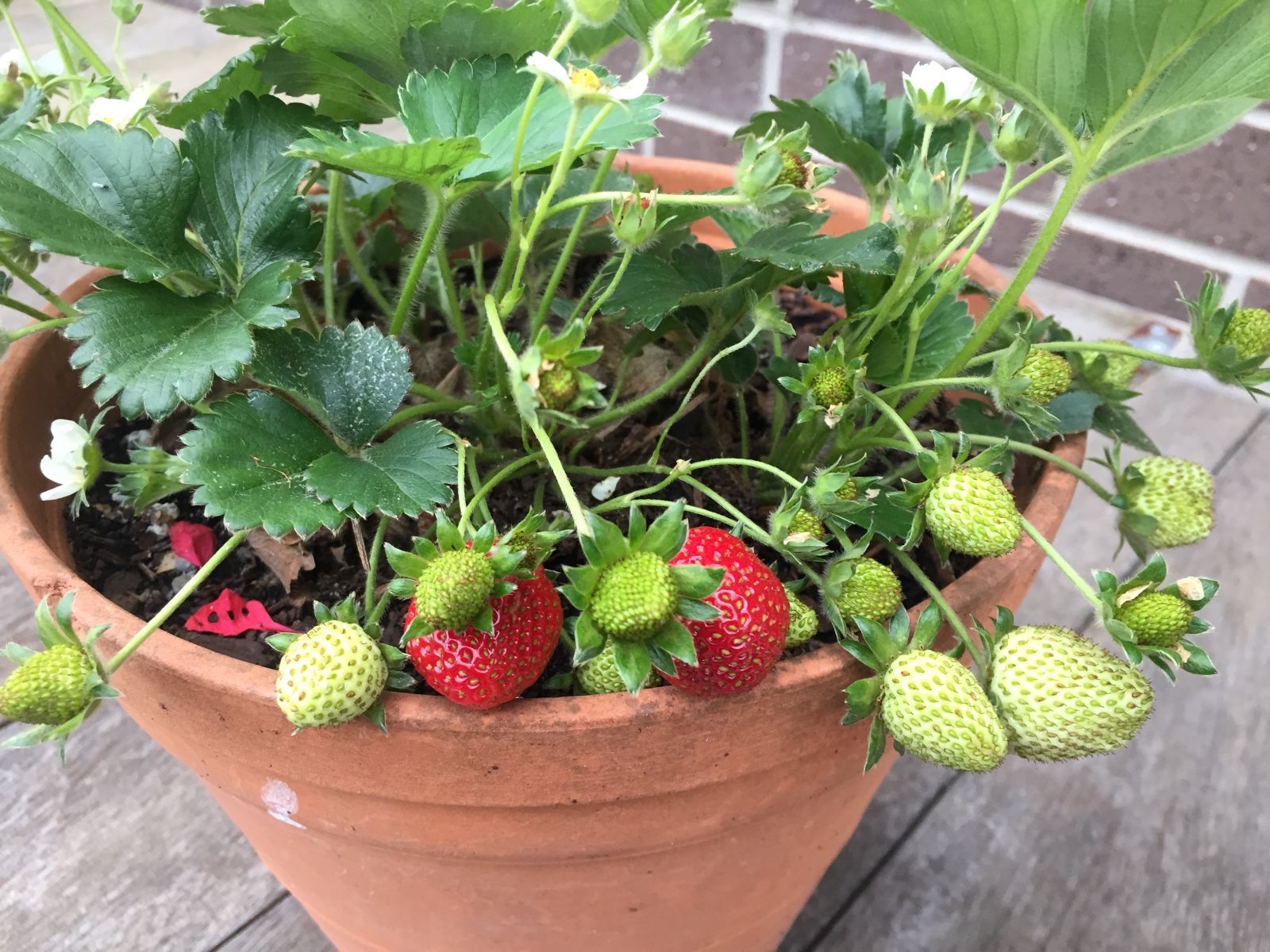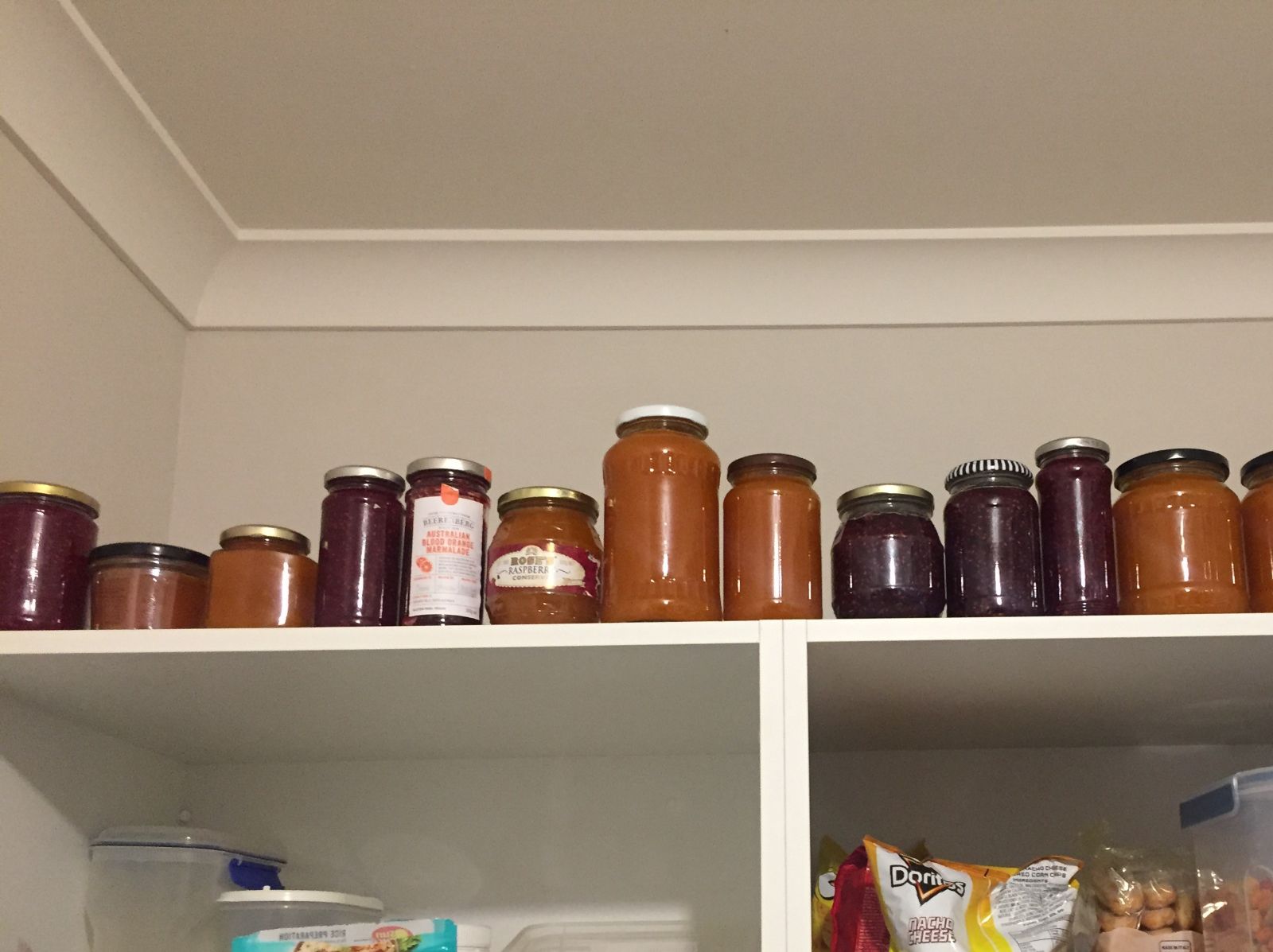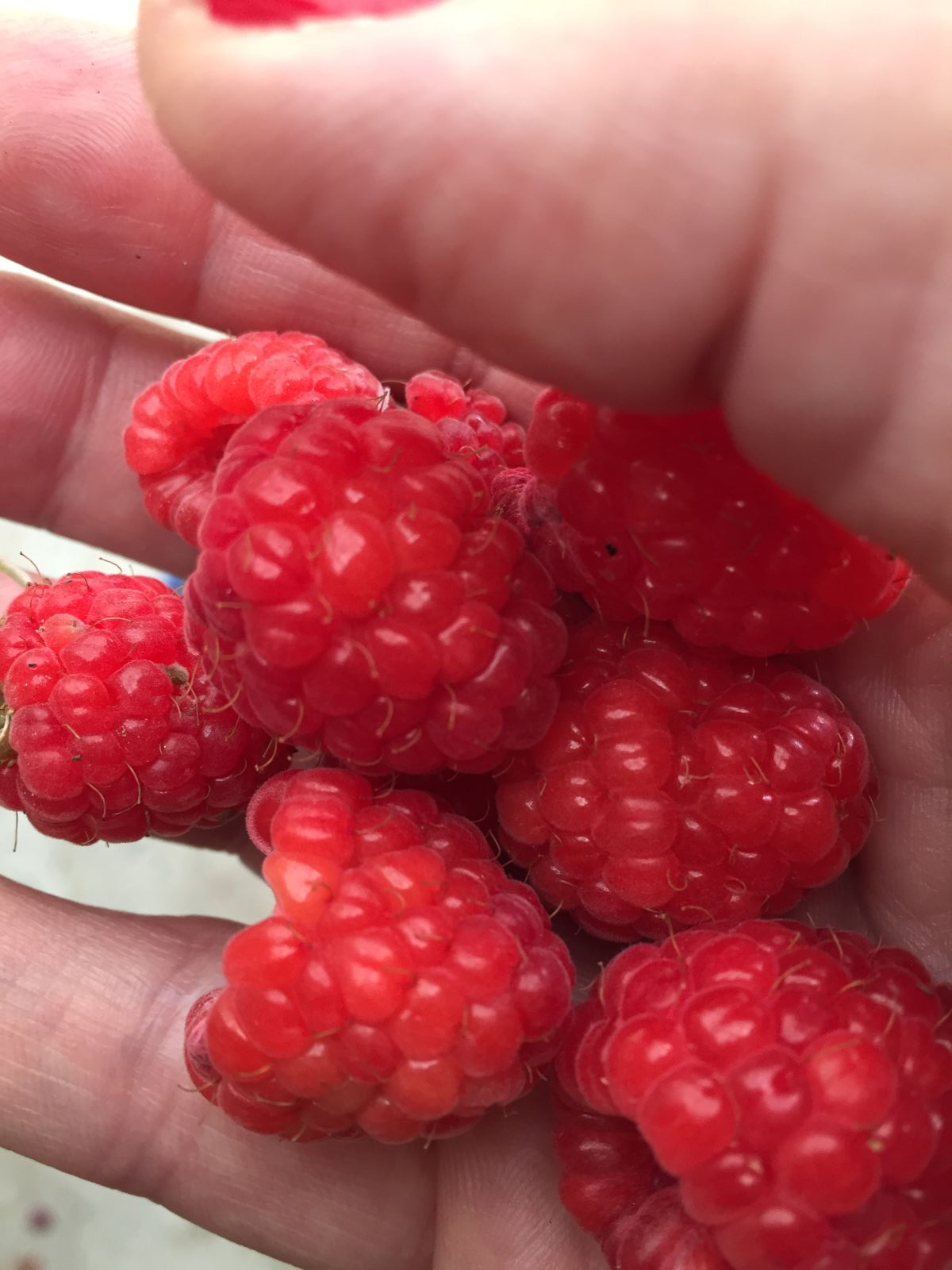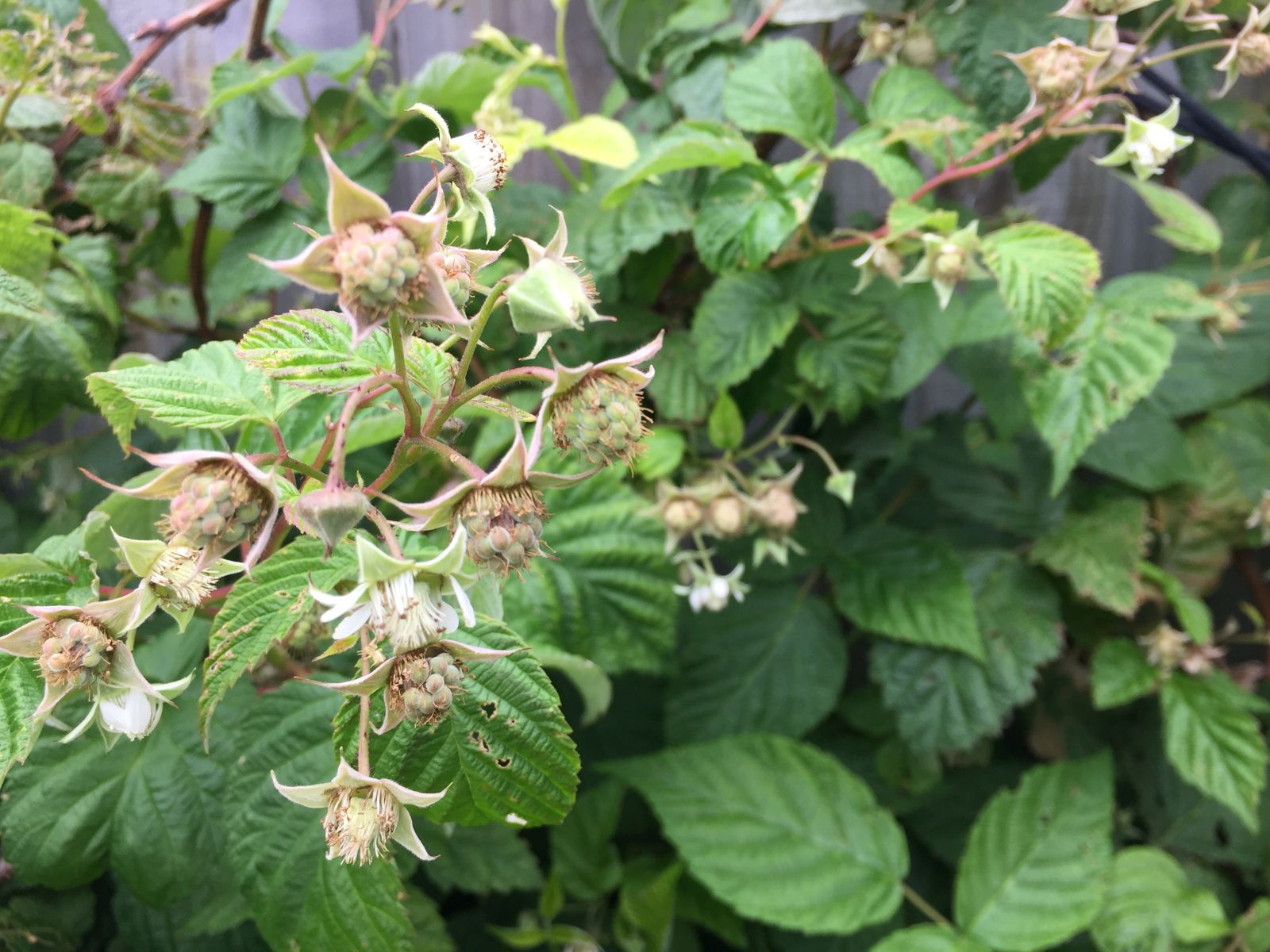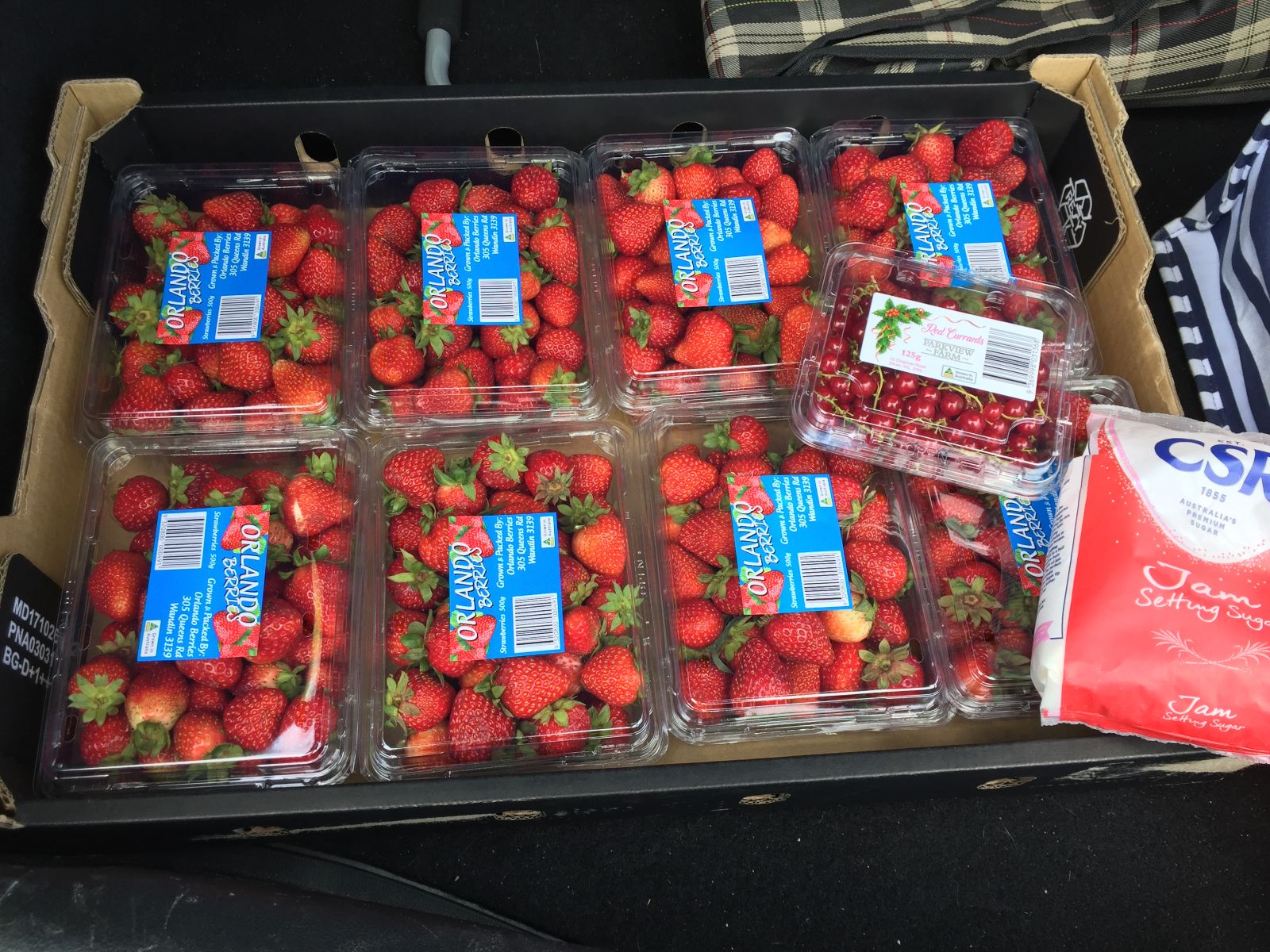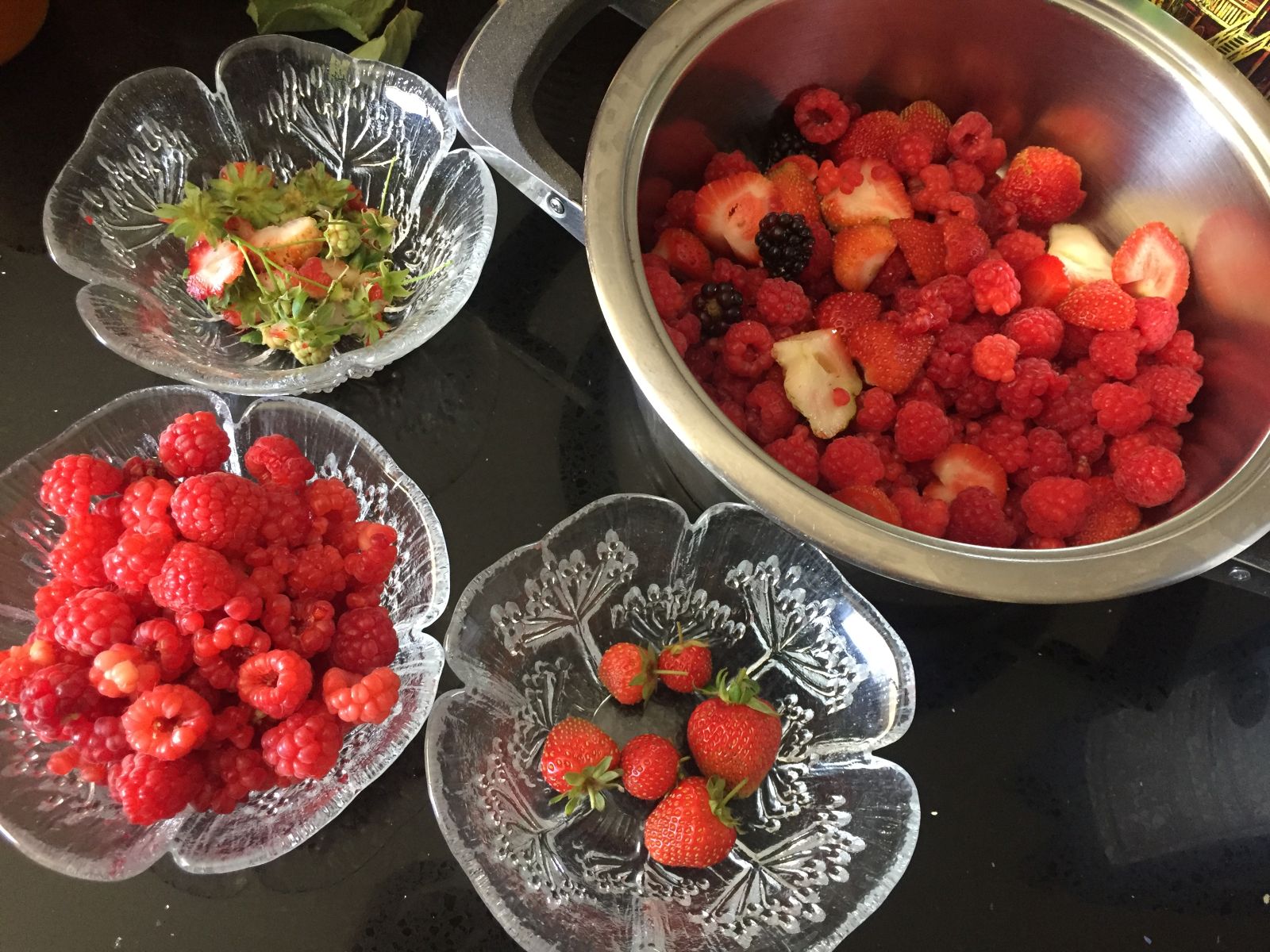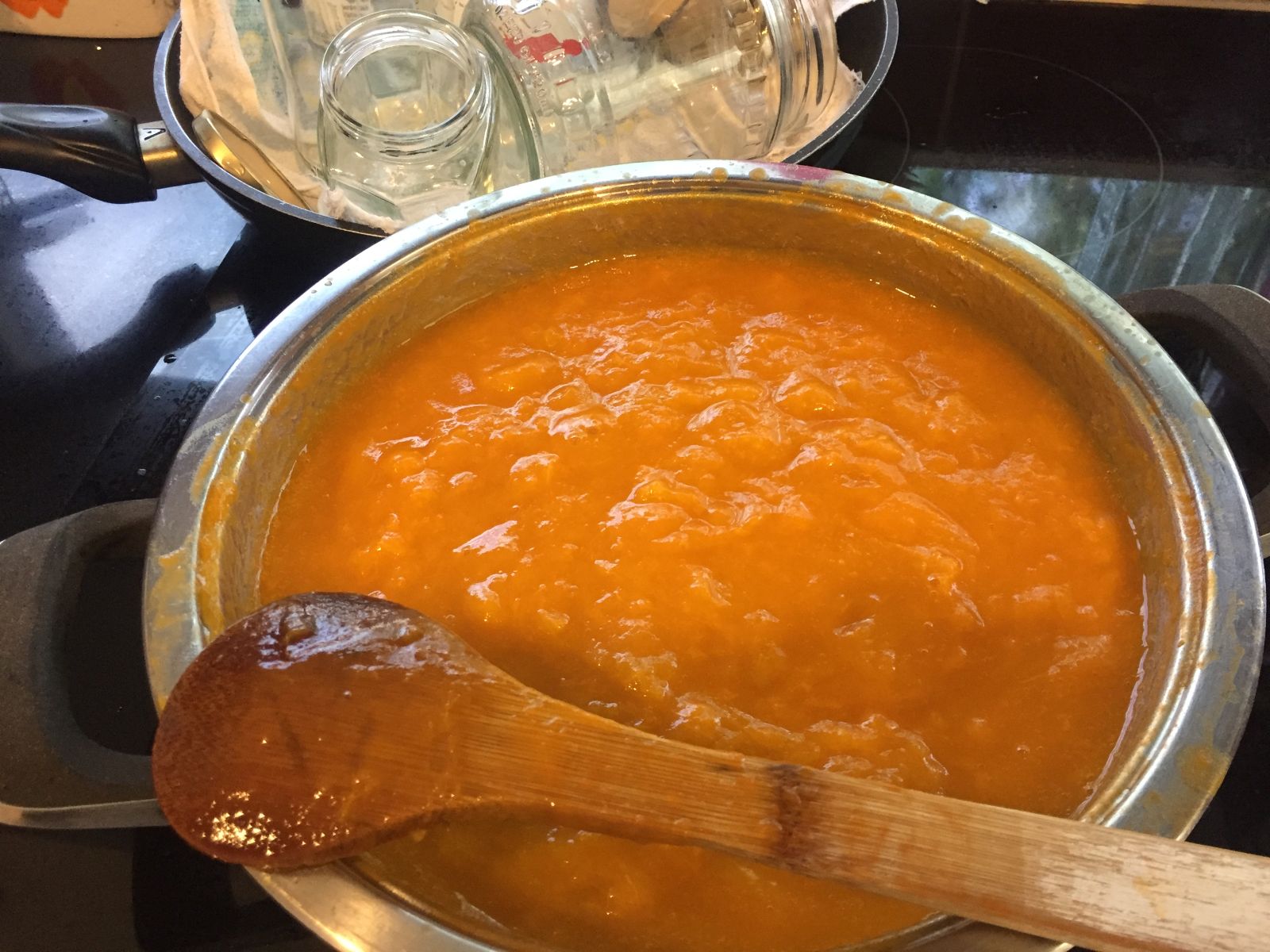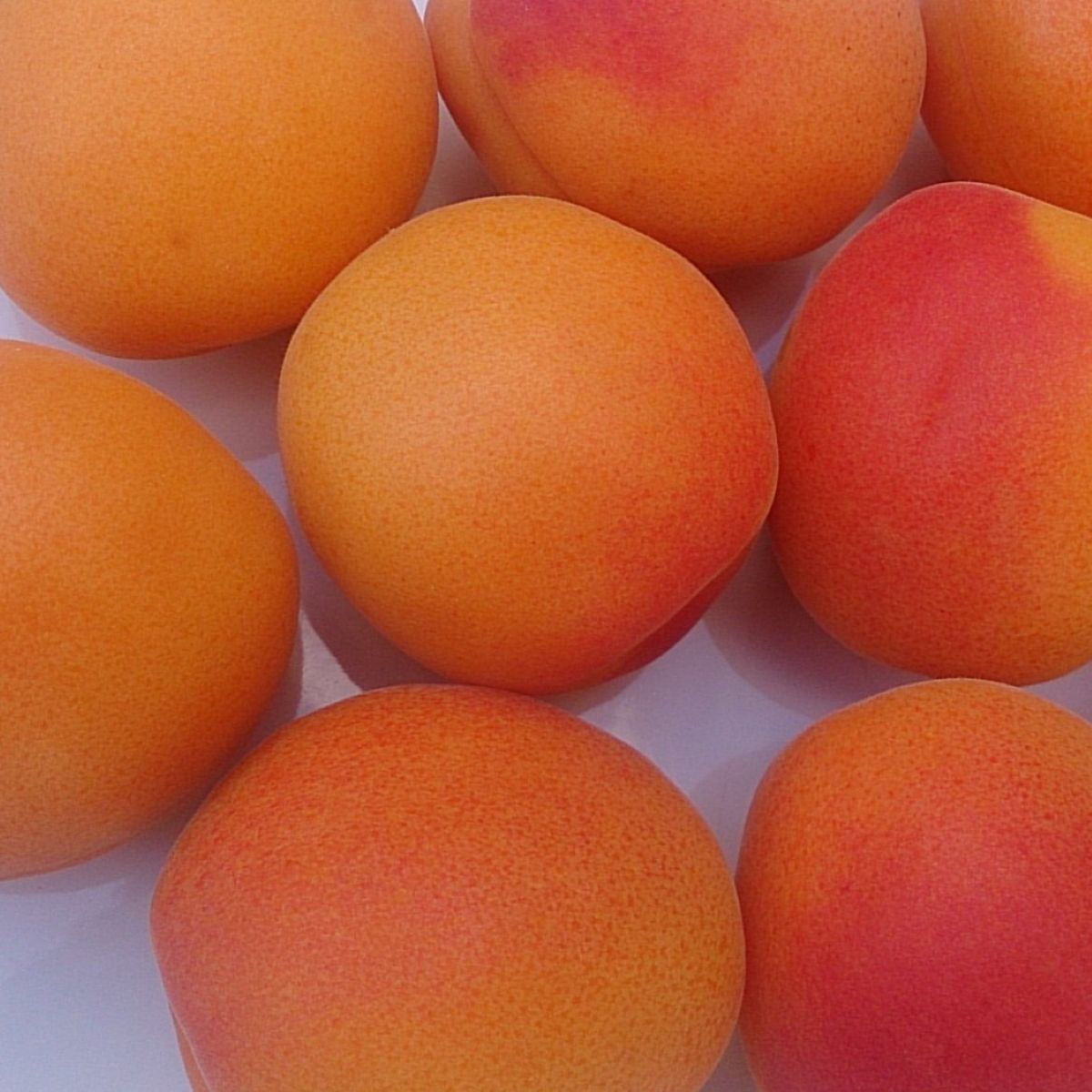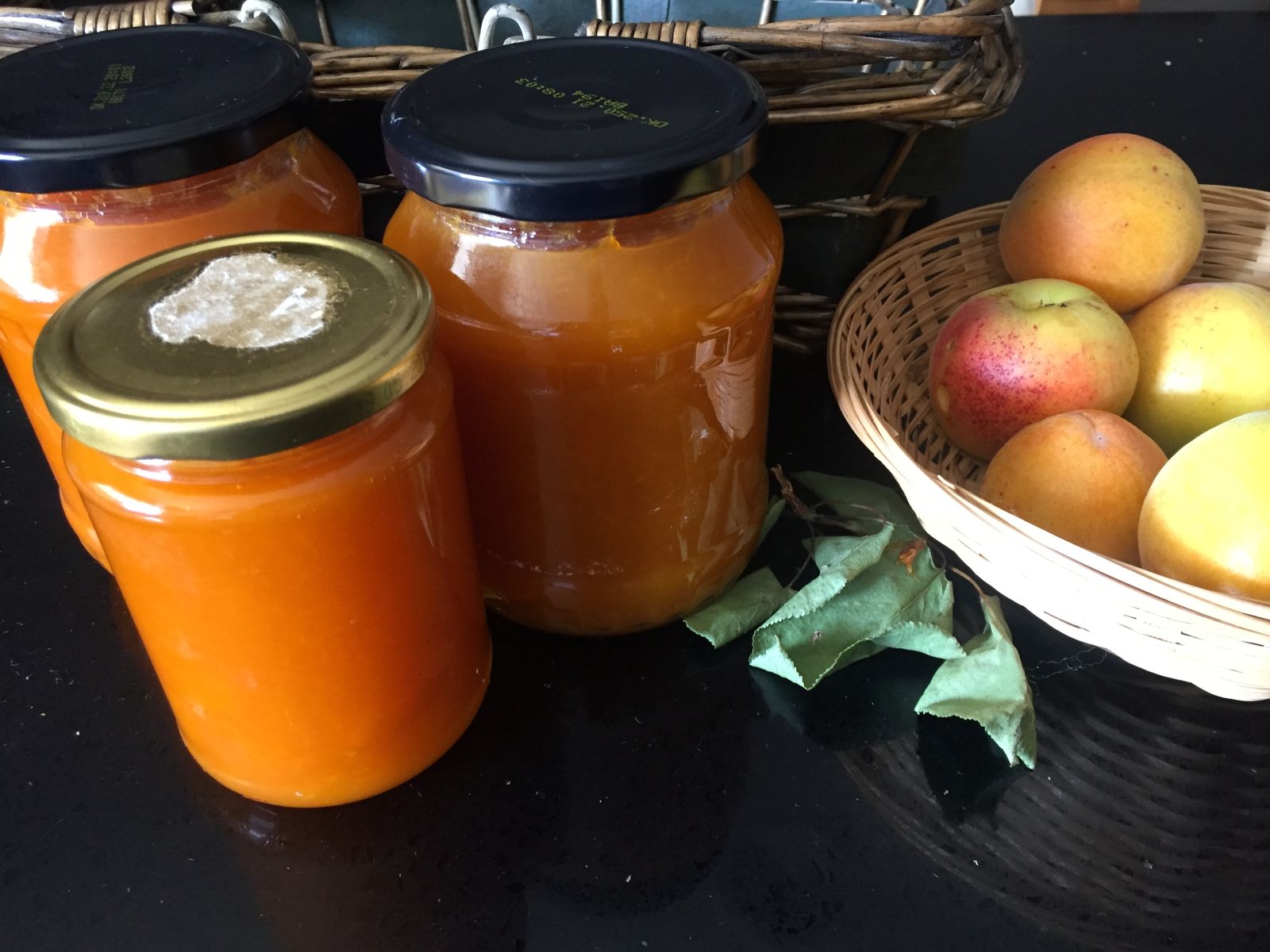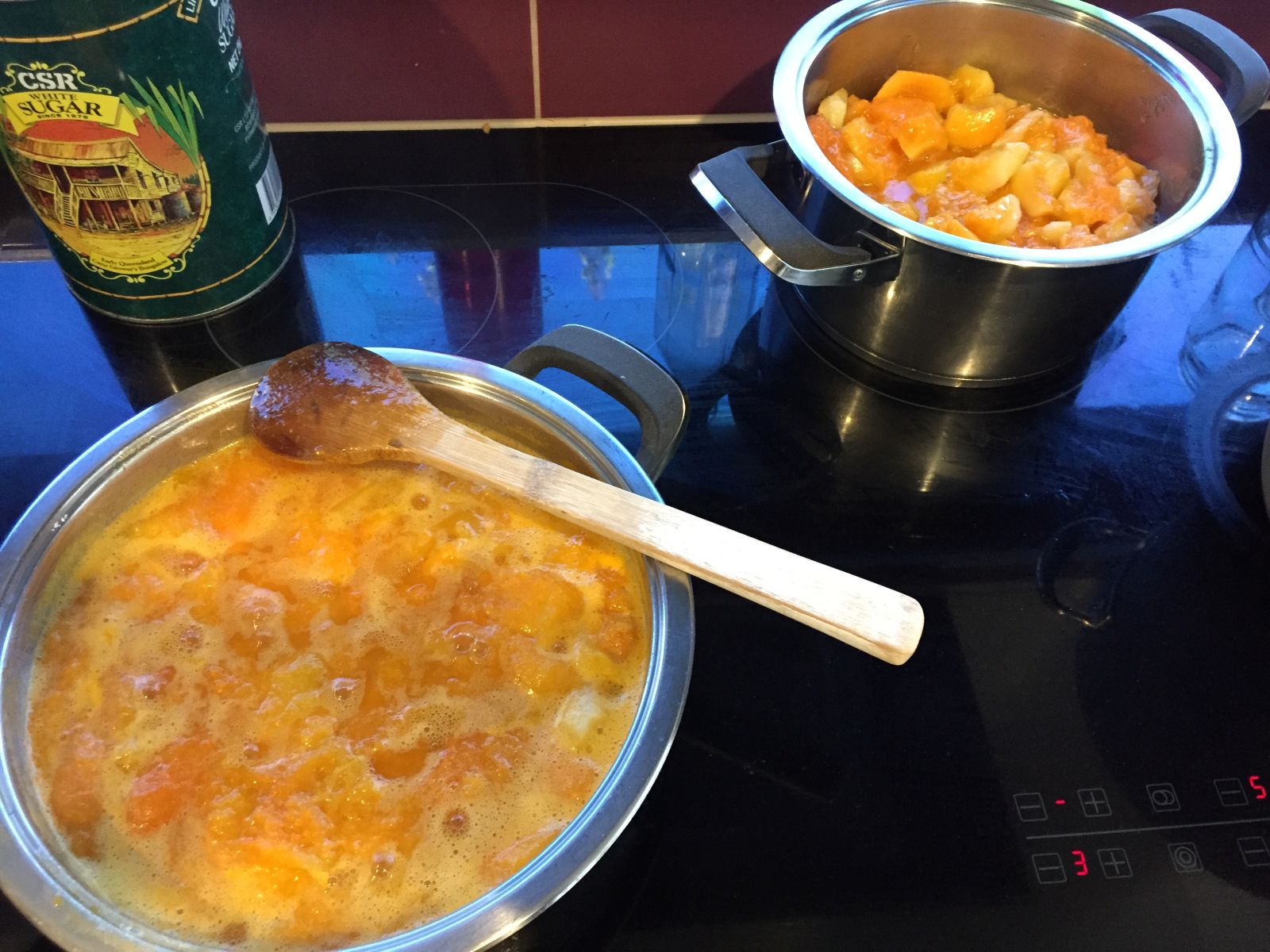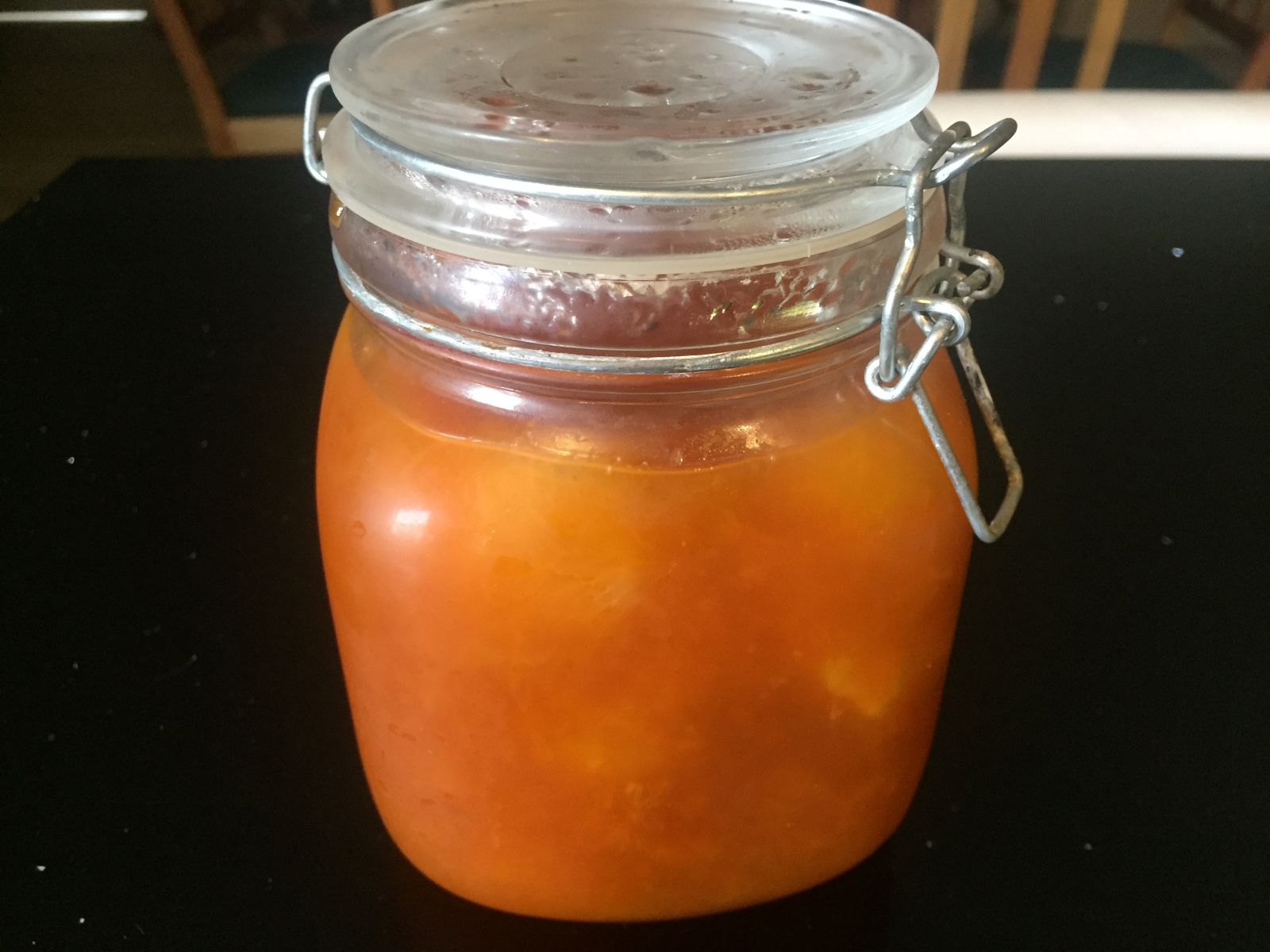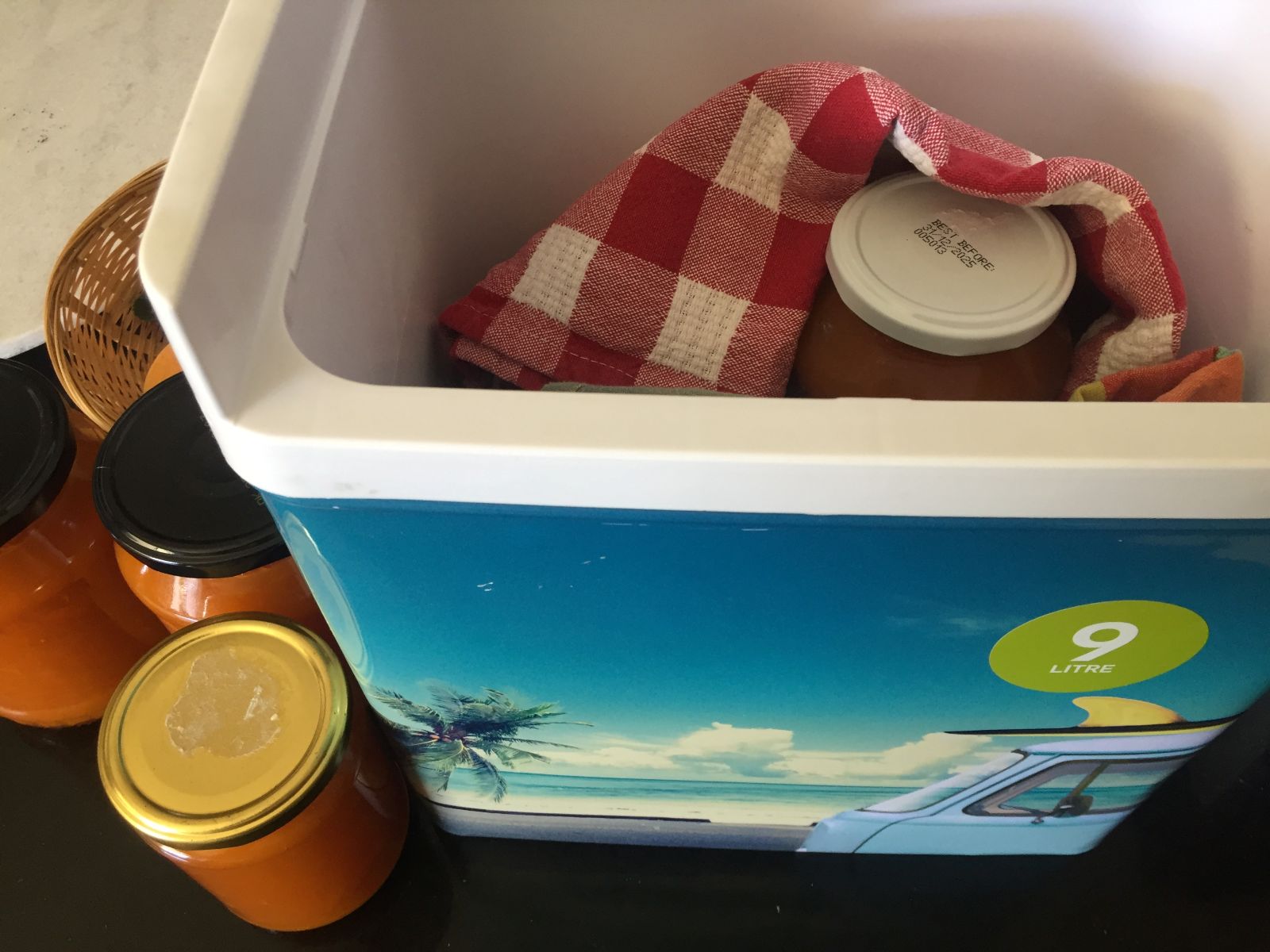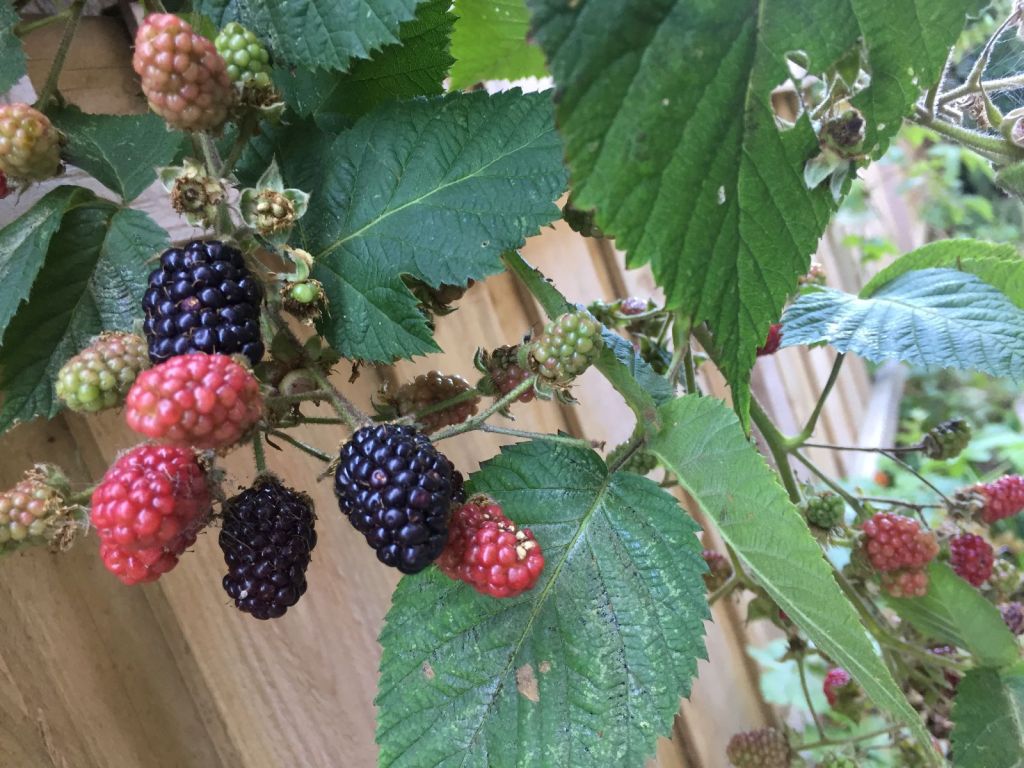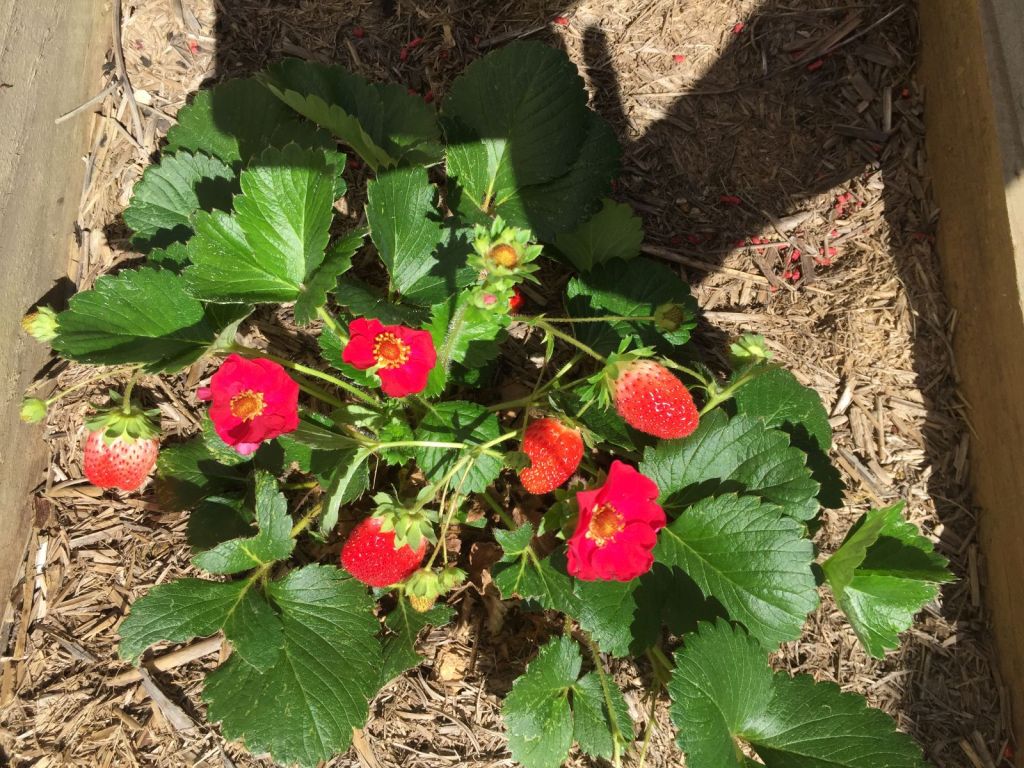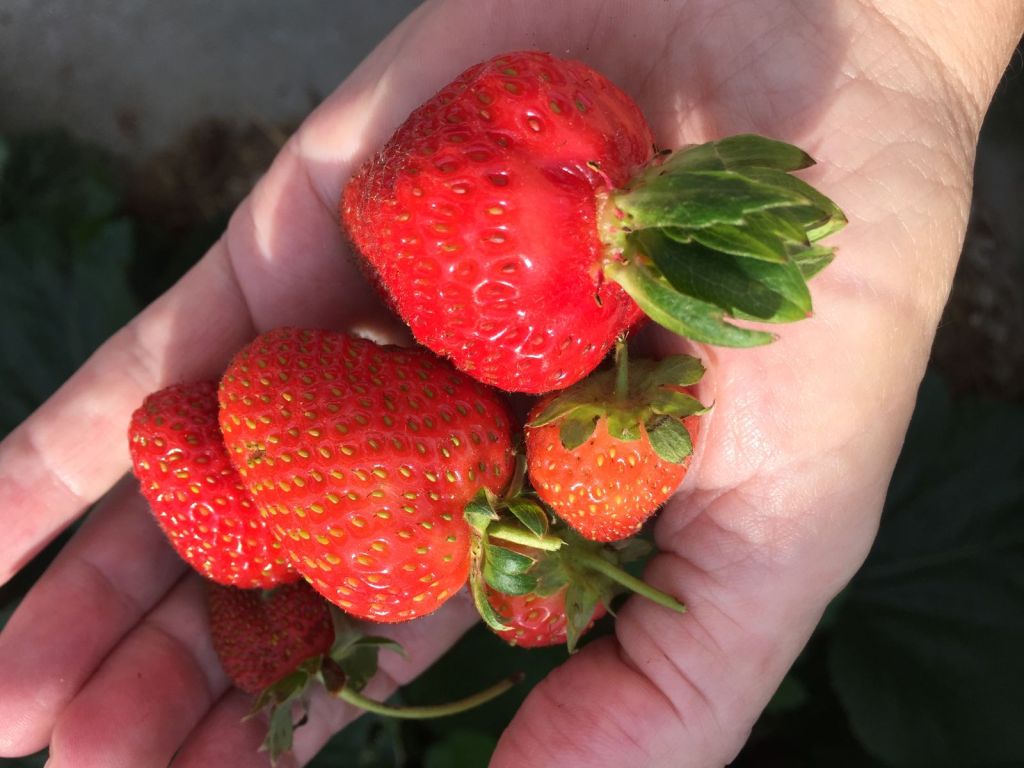
While my family says we don’t need any more jam in the pantry, I hate to waste a good crop of strawberries or raspberries if we have more than we can eat fresh. Once safely in jars, they give me a feeling of abundance and the chance to give people surprise treats, either as a jar of summer sweetness or baked into delicious tarts or pastries.
Ingredients
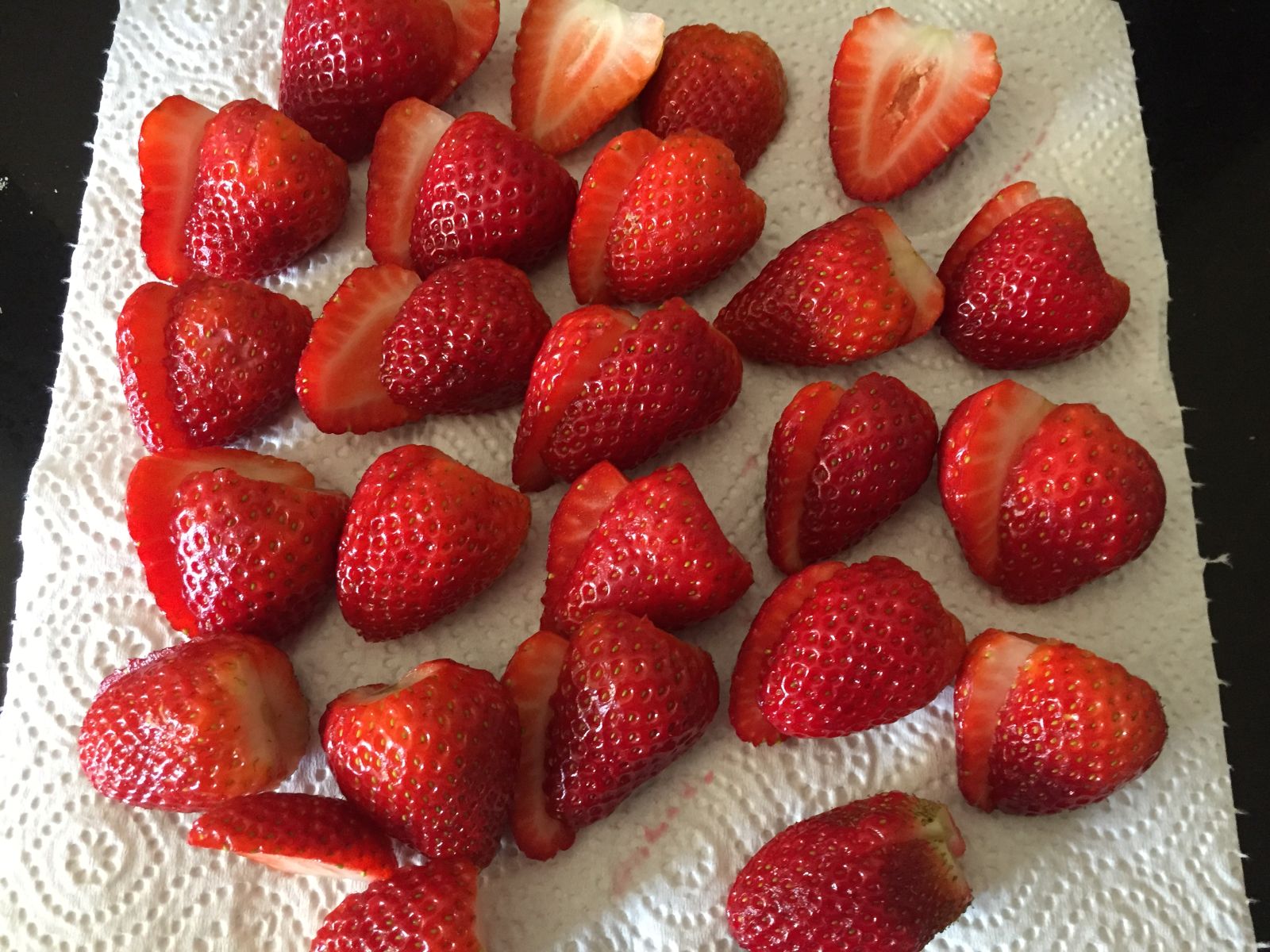
- 750 grams strawberries, hulled, sliced (or other fruit prepared accordingly).
- 1/3 cup lemon juice
- 650 g white sugar
Method
Combine all ingredients in a medium saucepan over medium heat. Bring to a simmer, then reduce heat to medium-low and cook, stirring frequently, for 20 minutes. Test the jam by spooning a little onto a chilled saucer and leaving it for 30 seconds, then gently push with your finger. If the top of the jam wrinkles and doesn’t run into the centre, it is ready. Otherwise, return to a simmer for a further 2–3 minutes and repeat the testing process until thickened.
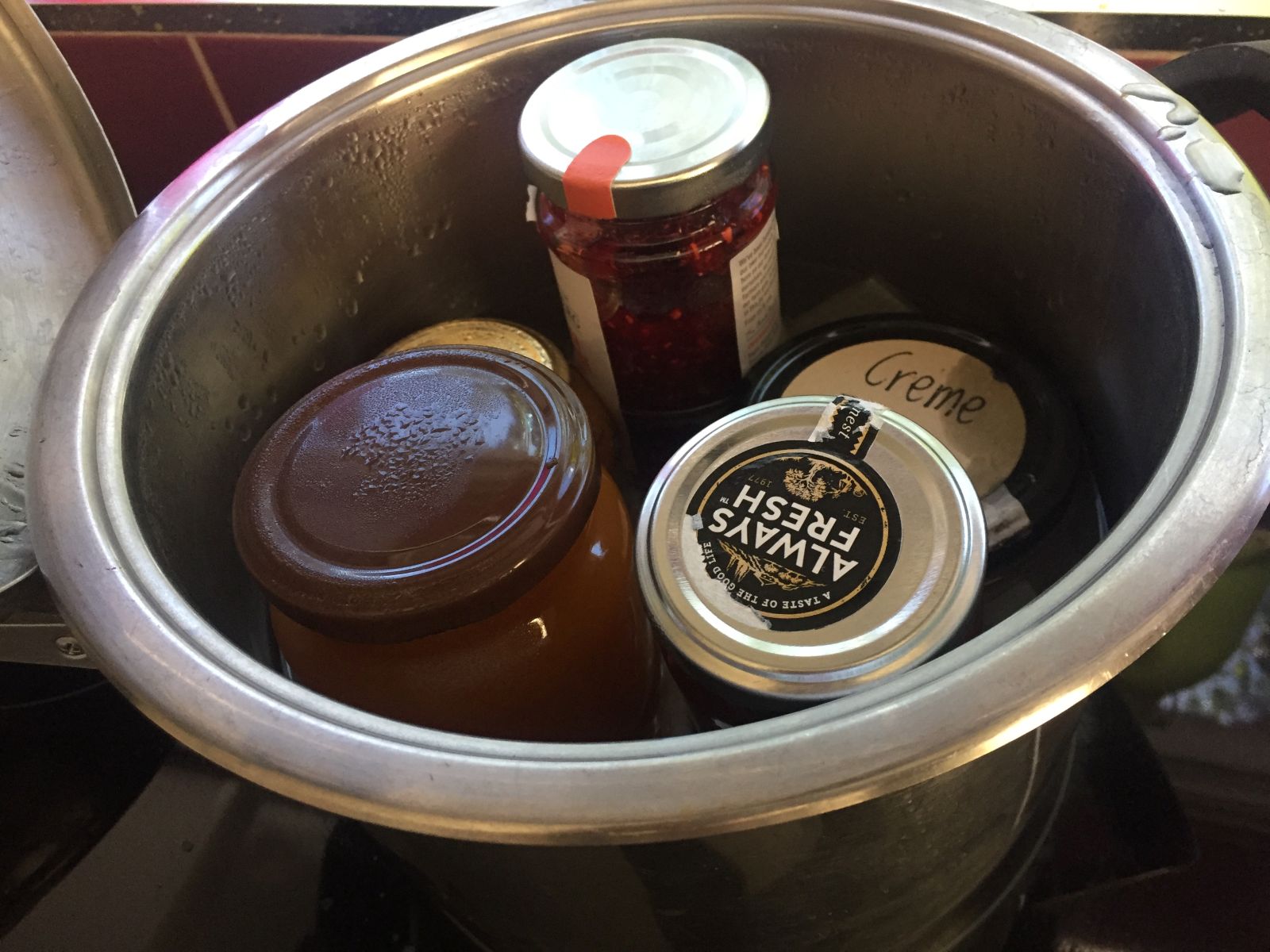
Ladle hot jam into warm, sterilised jars, filling to just below the rim, then clean the jar rim of any sticky residue with a wet towel and seal: center the flat lid on the jar and screw on the band until it is fingertip-tight (do not overtighten). Turn them upside down for a minute, then allow them to cool slowly (I used to put them in a small chilly bin between kitchen towels or use water bath canning). In 24 hours they should be well sealed and ready to be stored on the shelf (up to 1 year in a cool, dry place). Refrigerate after opening.
Additional Notes
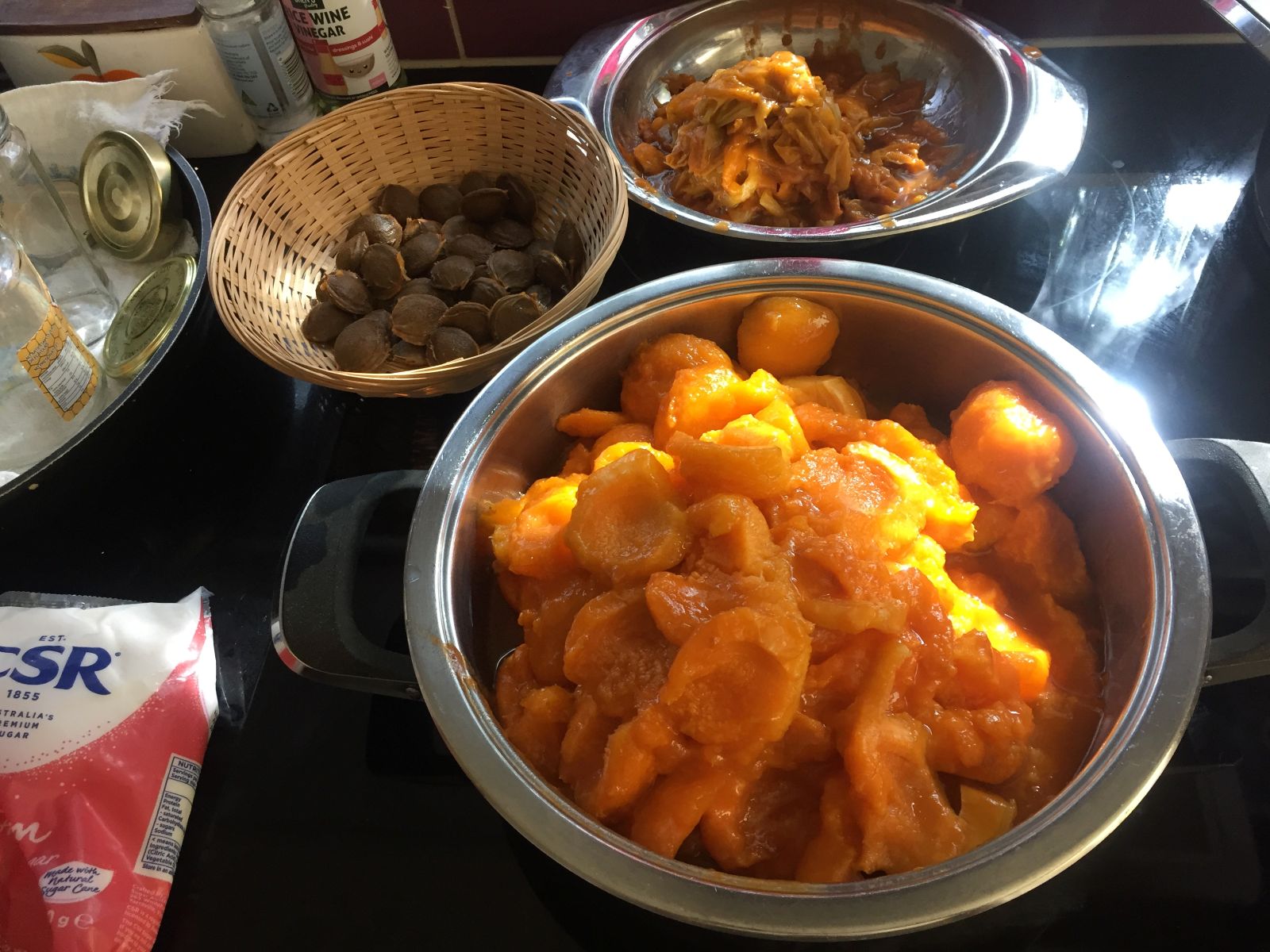
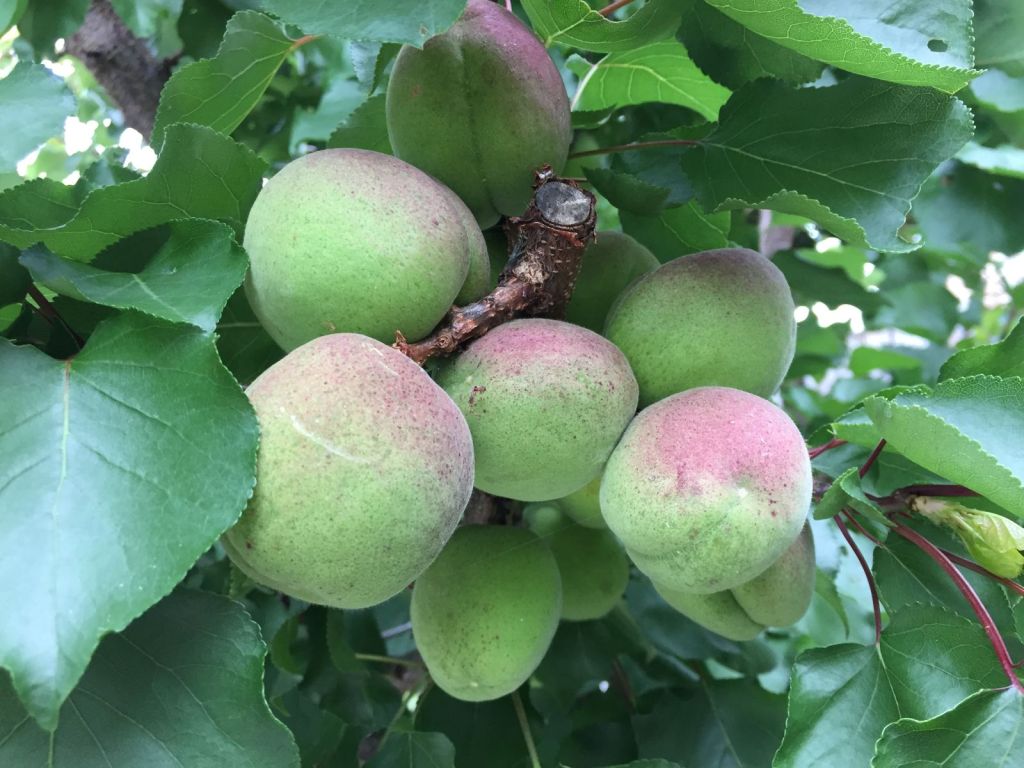
This recipe also works well with other berries and fruit, such as apricots. If using apricots, remove the skin and stones first—I briefly immerse them in boiling water to loosen the skin and make them easier to peel. You can also add ingredients for a more interesting flavour, such as orange zest, vanilla essence, cloves, or ground cinnamon. Cloves work especially well in peach jam or conserve—that’s how my mother used to make it.
Useful Tips
I sterilise the jars and their lids in a large pot of boiling water. You need to be very careful and avoid burns, so it’s best to let the water cool down to lukewarm before lifting them out and placing them on a tray to dry (although if you can find a way to safely lift them out of the pot, the hotter the jars are, the better when you start filling them up). To avoid the hot jam causing the glass to crack, I place the jars on a metal baking dish that conducts heat well, and only pour a small amount of the hot jam into the jar at first.
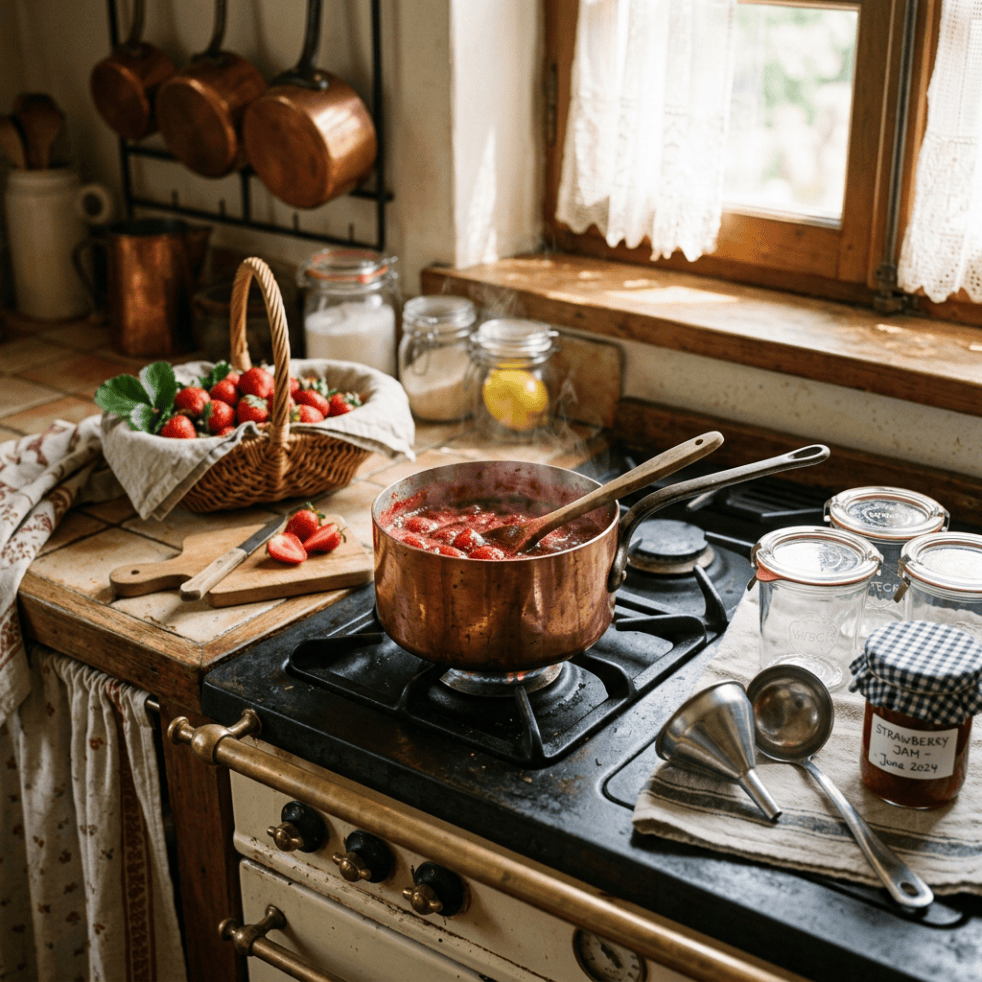
The pictures show that I also use jam setting sugar (contains roughly 98% sugar, apple pectin as a gelling agent, citric acid as an acidity regulator, and a small amount of vegetable oil). I start with just a small amount of plain sugar (50-100g) mixed in to release the juices from the fruit, and add 550-600g of the jam setting sugar after the first 15 minutes on the stove, bringing it back to a boil before canning.
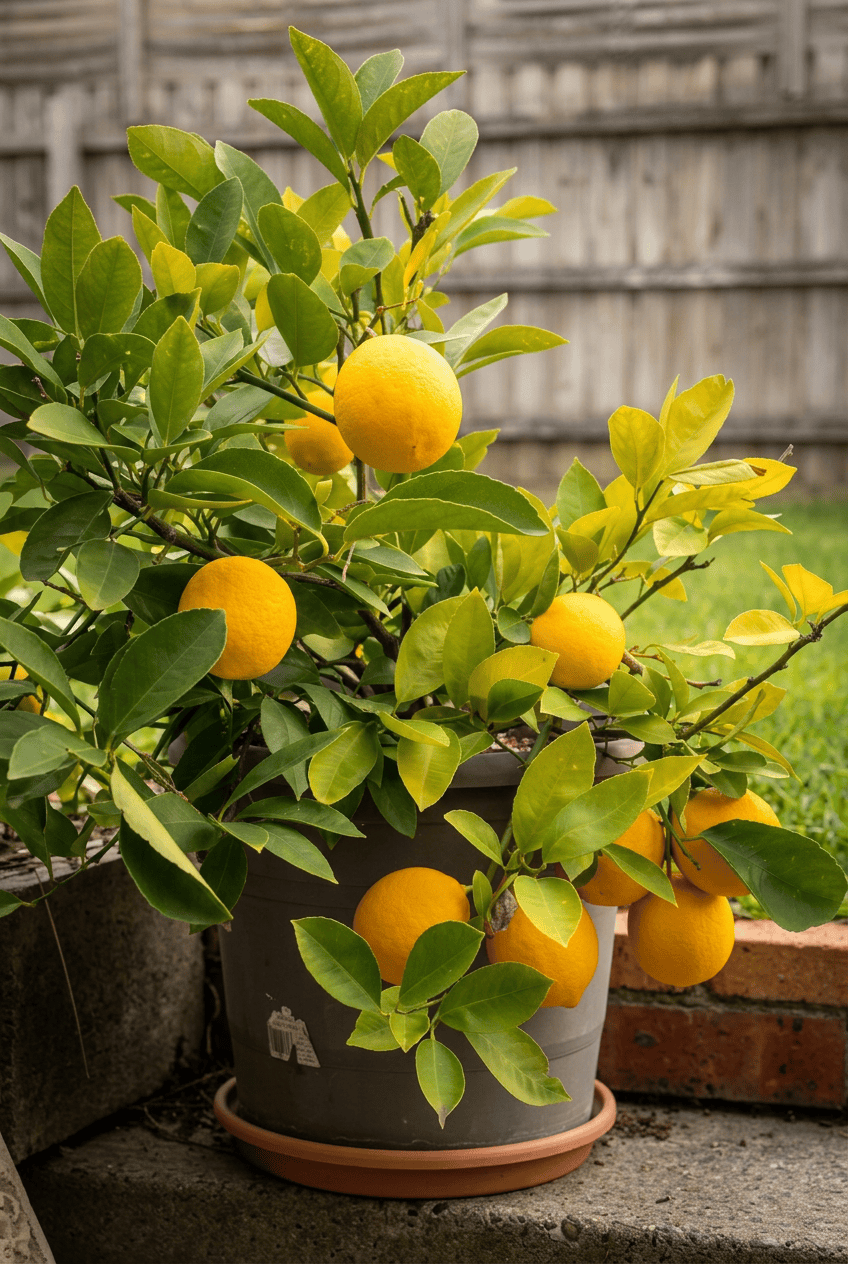
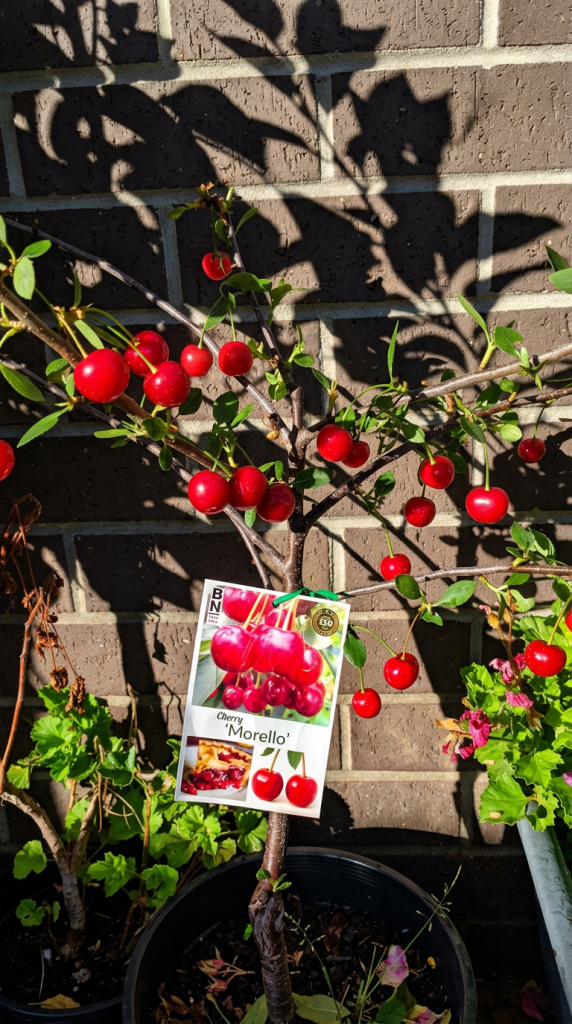
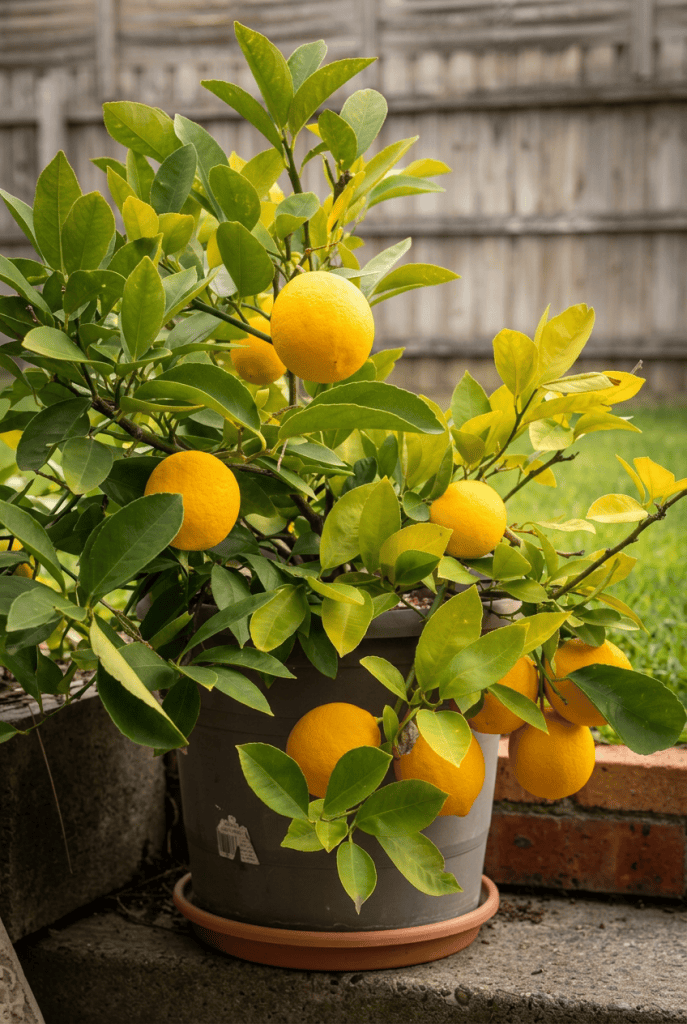
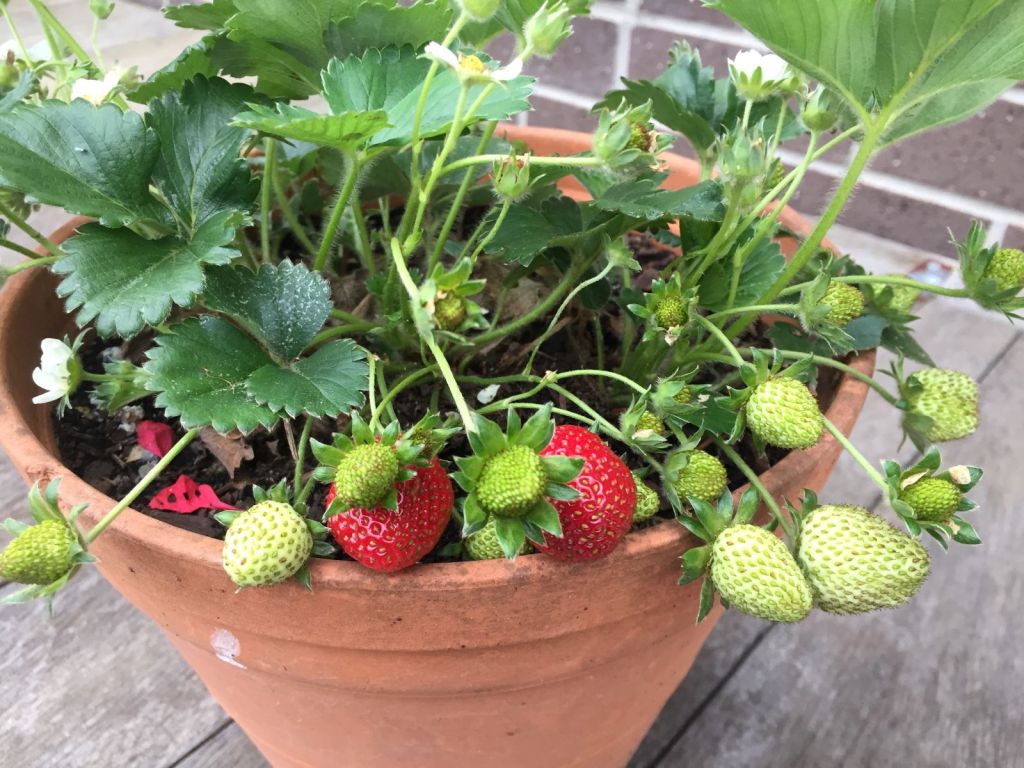
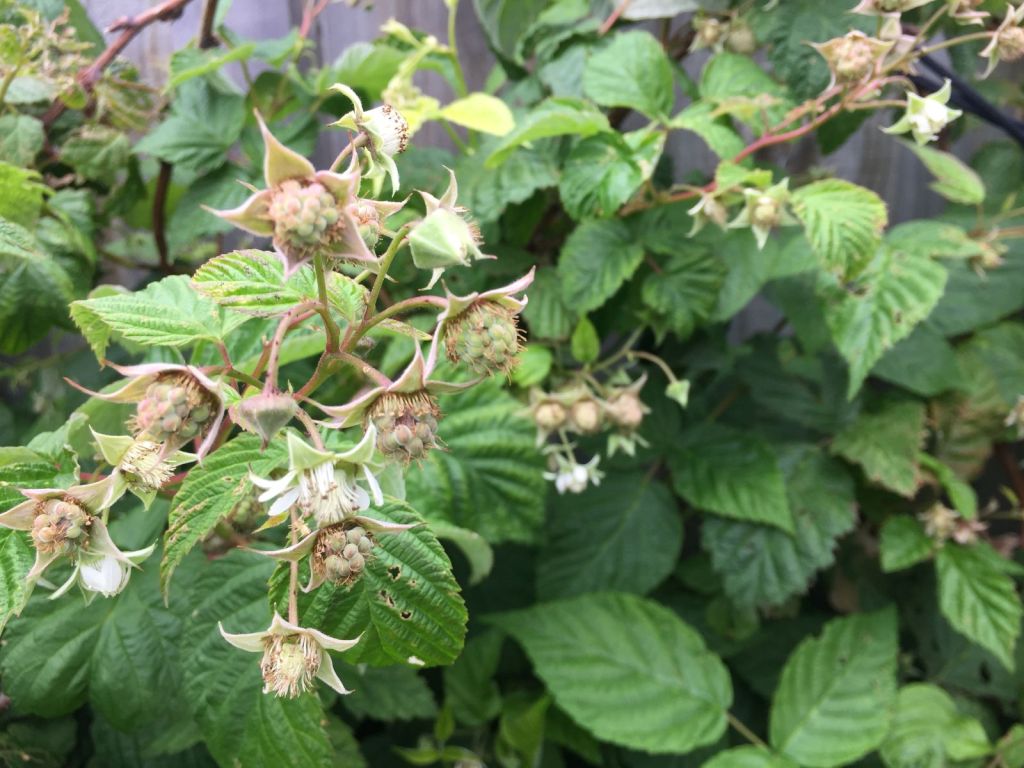
You don’t need to be the owner of a huge garden to do this (I certainly am not, as most of my berries grow in pots or in a narrow partly shaded area between the house and the fence). You can use frozen berries from the supermarket as they are relatively cheap, or catch a good discount at a fruit market when they are in season.